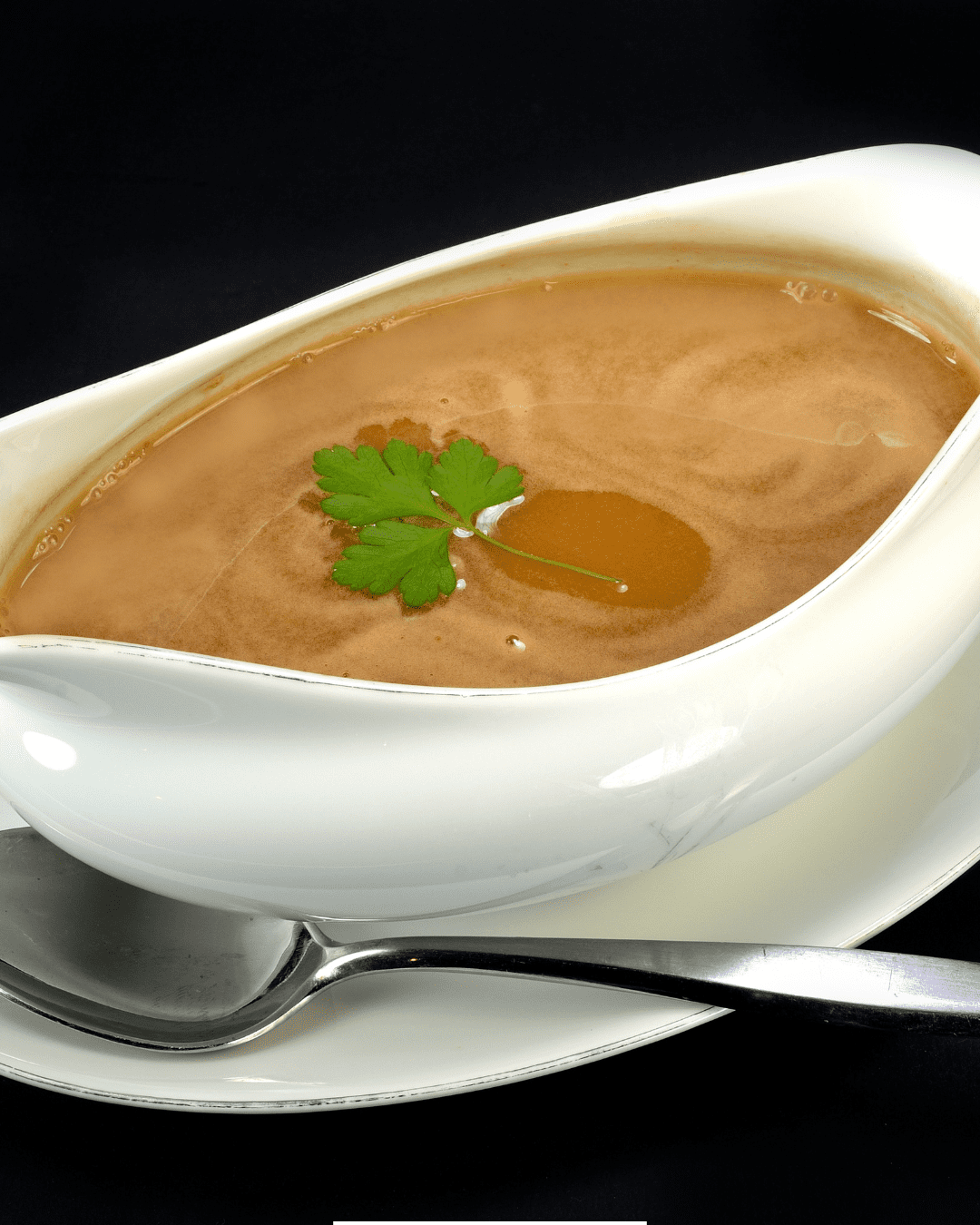
As someone who grew up thinking gravy was just something you poured out of a jar, discovering Serious Eats’ techniques completely changed how I approach this comforting classic. Forget the lumpy, flavorless imposters of your past; this Serious Eats Gravy recipe gets it right every time.
Table of Contents
How to make Serious Eats Gravy
Serious Eats Gravy is a rich, savory gravy recipe created by the food website Serious Eats, known for its science-based cooking.
Ingredients
For the Gravy Base:
- Pan drippings: From roasted chicken, turkey, or beef (including any bits stuck to the roasting pan).
- Unsalted butter (if needed to supplement pan drippings): 2–4 tablespoons.
- Flour: 1/4 cup (all-purpose flour is best for making the roux).
- Stock or broth: 2–3 cups.
- Aromatics (optional): 1 small onion, carrot, or piece of celery, finely chopped.
- Soy sauce or Worcestershire sauce: 1–2 teaspoons (for umami depth).
- Fresh herbs: Thyme, rosemary, or sage for earthiness.
- Freshly ground black pepper: To taste.
- Salt: To taste. Avoid salting until the end since pan drippings and stock can already be salty.
Instructions
1. Collect Your Pan Drippings: Once your roast is cooked, transfer the meat to a plate or carving board to rest. Carefully pour the drippings from the roasting pan into a heatproof container. Let it sit so the fat rises to the top. Skim off excess fat, reserving about 2–4 tablespoons for your gravy. If there isn’t enough fat, supplement with unsalted butter.
2. Deglaze the Roasting Pan: Place the roasting pan on the stovetop over medium-high heat. Add a splash of stock or wine to the pan, and use a wooden spoon to scrape up the flavorful browned bits (also called fond) stuck to the bottom. These are the foundation of your gravy’s flavor. Pour this liquid into the same container as the drippings.
3. Make the Roux: In a medium saucepan, combine 2–4 tablespoons of the reserved fat (or butter) with an equal amount of flour. Cook over medium heat, whisking constantly. Cook the roux for about 2–3 minutes for a lighter gravy or up to 5 minutes for a deeper, nutty flavor. Be careful not to let it burn.
4. Incorporate the Liquid: Slowly add the stock to the roux, about 1/2 cup at a time, whisking vigorously as you pour to prevent lumps. Add the liquid from the deglazed pan as well. Continue to cook and whisk until the mixture is smooth and begins to thicken.
5. Simmer and Add Flavor: Reduce the heat to low and let the gravy simmer for about 10–15 minutes. Stir occasionally to prevent sticking. Stir in a dash of soy sauce or Worcestershire sauce for umami, and add herbs like thyme, rosemary, or sage for additional complexity.
6. Adjust Seasoning: Taste your gravy and season with salt and pepper as needed. Since the drippings and stock may already have salt, hold off until the end before adding any. Strain the gravy through a fine-mesh sieve if you want a silky, lump-free consistency (optional).
7. Serve Immediately: Warm the gravy over low heat just before serving. Pour into a gravy boat or serve directly from the pan.
Serious Eats-Approved Tips for Perfect Gravy
- Use a Thermometer (Optional): Gravy thickens optimally at around 180–190°F (82–88°C). If you accidentally over-reduce the gravy and it becomes too thick, whisk in a bit more stock to loosen it.
- Degrease the Drippings: Skimming the fat from the drippings ensures the gravy isn’t greasy. A fat separator can make this process easier.
- Texture Matters: To avoid lumps, make sure you whisk constantly while adding liquid to the roux. Cold stock works best since it prevents clumping.
- Don’t Skip the Fond: The browned bits in the bottom of the roasting pan are pure flavor—you’ll want to deglaze the pan thoroughly to capture all that goodness.
- Make It Ahead: You can make gravy ahead of time and reheat gently on the stovetop. If your gravy thickens too much after cooling, whisk in a splash of stock to bring it back to the right consistency.
- Flavor Boosters: Soy sauce or Worcestershire sauce adds that hard-to-describe savoriness. Don’t overdo it—start with a teaspoon and taste as you go.
- Experiment with Add-ins: Some Serious Eats recipes suggest a splash of white wine, sherry, or heavy cream, depending on the roast it’s accompanying. Feel free to experiment.
What to serve with
Serious Eats Gravy, especially when inspired by the rich, flavorful approach of Serious Eats, is a true multi-tasker in the kitchen. Its velvety texture and deep savory notes bring an added dimension of flavor to everything it touches, making it a perfect companion to countless recipes.
- Roast Turkey: A Thanksgiving classic, Serious Eats Gravy is practically synonymous with turkey. Use the drippings from this bird to make a gravy that complements the juicy, tender meat. It’s especially essential for the usually dry turkey breast.
- Roast Chicken: A great option for any night of the week. Drizzle gravy over the carved chicken or alongside potatoes and vegetables.
- Roast Beef or Prime Rib: A heartier gravy that incorporates beef drippings is perfect for these cuts, particularly paired with Yorkshire pudding (more on that below).
- Pork Loin or Pork Chops: A lighter gravy with a subtle herb flavor works beautifully with pork roasts or chops.
Ingredients Substitutes
If you want to make a Serious Eats Gravy inspired by the techniques and flavor-packed approach of Serious Eats but need ingredient substitutes due to dietary preferences, allergies, or simply not having certain items on hand, there are plenty of alternatives you can use.
Substitutes for Flour
Flour is traditionally used to create a roux and thicken the gravy. If you’re gluten-free or need an alternative, you have lots of choices:
- Cornstarch: This is a gluten-free option often used in place of flour. Mix cornstarch with cold stock in a small bowl (making a slurry) before whisking it into the gravy. It thickens quickly, so start with modest amounts.
- Arrowroot Powder or Tapioca Starch: Both are excellent thickening agents that work similarly to cornstarch. They’re ideal for gluten-free diets and yield a glossy, smooth finish.
- Potato Starch: Potato starch is a great gluten-free option, especially if you’re making savory dishes. Use it the same way as cornstarch (mix it into a slurry).
- Rice Flour: Rice flour works well to thicken gravy and is less prone to clumping than other substitutes.
Stock Substitutes
Stock or broth is one of the most important elements in gravy, as it becomes the base of the sauce. Based on what you have or your dietary needs, here are alternatives:
Water and Bouillon Cubes or Powder
- If you’re out of stock, dissolve bouillon cubes or granules in hot water to create a quick flavor-packed stock.
- Serious Eats recommends low-sodium bouillon or stock so that you can control the saltiness of your final gravy.
Vegetable Stock (For Vegetarian or Vegan Gravy)
- Use store-bought or homemade vegetable stock in place of chicken, turkey, or beef stock. Caramelized vegetables like onions, carrots, and celery in your stock can enhance the flavor.
- To boost savory notes, stir in soy sauce, mushroom powder, or miso paste.
Wine + Water Combination: White or red wine mixed with water can create an acidic, flavorful liquid base. It works well for gravies served with beef or lamb.
Milk Alternatives: Some variations of gravy use milk or cream for added richness. For dairy-free options, substitute with unsweetened almond milk, cashew milk, or coconut milk for creamy texture.
Mushroom Stock: Mushroom stock has a deep, umami flavor that can mimic the complexity of meat-based stocks. Perfect for vegetarian gravy.
Final Thoughts
By following this Serious Eats Gravy you’ll have a rich, velvety gravy that’s the perfect centerpiece for any meal.
More Sauce Recipes:
- Copycat Serious Eats Cranberry Sauce Recipe
- Copycat Alton Brown Turkey Gravy Recipe
- Costco Kevin’s Gravy Recipe
- Homemade Costco Cranberry Sauce Recipe
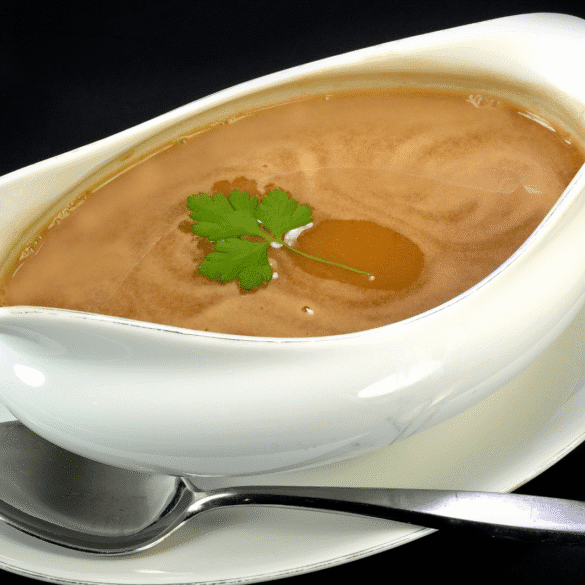
Ingredients
- Pan drippings: From roasted chicken
- Unsalted butter : 2–4 tablespoons.
- Flour: 1/4 cup
- Stock or broth: 2–3 cups.
- Aromatics (optional): 1 small onion
- Soy sauce: 1–2 teaspoons
- Fresh herbs: Thyme
- Freshly ground black pepper: To taste.
- Salt: To taste
Instructions
1. Collect Your Pan Drippings: Once your roast is cooked, transfer the meat to a plate or carving board to rest. Carefully pour the drippings from the roasting pan into a heatproof container. Let it sit so the fat rises to the top. Skim off excess fat, reserving about 2–4 tablespoons for your gravy. If there isn’t enough fat, supplement with unsalted butter.
2. Deglaze the Roasting Pan: Place the roasting pan on the stovetop over medium-high heat. Add a splash of stock or wine to the pan, and use a wooden spoon to scrape up the flavorful browned bits (also called fond) stuck to the bottom. These are the foundation of your gravy’s flavor. Pour this liquid into the same container as the drippings.
3. Make the Roux: In a medium saucepan, combine 2–4 tablespoons of the reserved fat (or butter) with an equal amount of flour. Cook over medium heat, whisking constantly. Cook the roux for about 2–3 minutes for a lighter gravy or up to 5 minutes for a deeper, nutty flavor. Be careful not to let it burn.
4. Incorporate the Liquid: Slowly add the stock to the roux, about 1/2 cup at a time, whisking vigorously as you pour to prevent lumps. Add the liquid from the deglazed pan as well. Continue to cook and whisk until the mixture is smooth and begins to thicken.
5. Simmer and Add Flavor: Reduce the heat to low and let the gravy simmer for about 10–15 minutes. Stir occasionally to prevent sticking. Stir in a dash of soy sauce or Worcestershire sauce for umami, and add herbs like thyme, rosemary, or sage for additional complexity.
6. Adjust Seasoning: Taste your gravy and season with salt and pepper as needed. Since the drippings and stock may already have salt, hold off until the end before adding any. Strain the gravy through a fine-mesh sieve if you want a silky, lump-free consistency (optional).
7. Serve Immediately: Warm the gravy over low heat just before serving. Pour into a gravy boat or serve directly from the pan.
