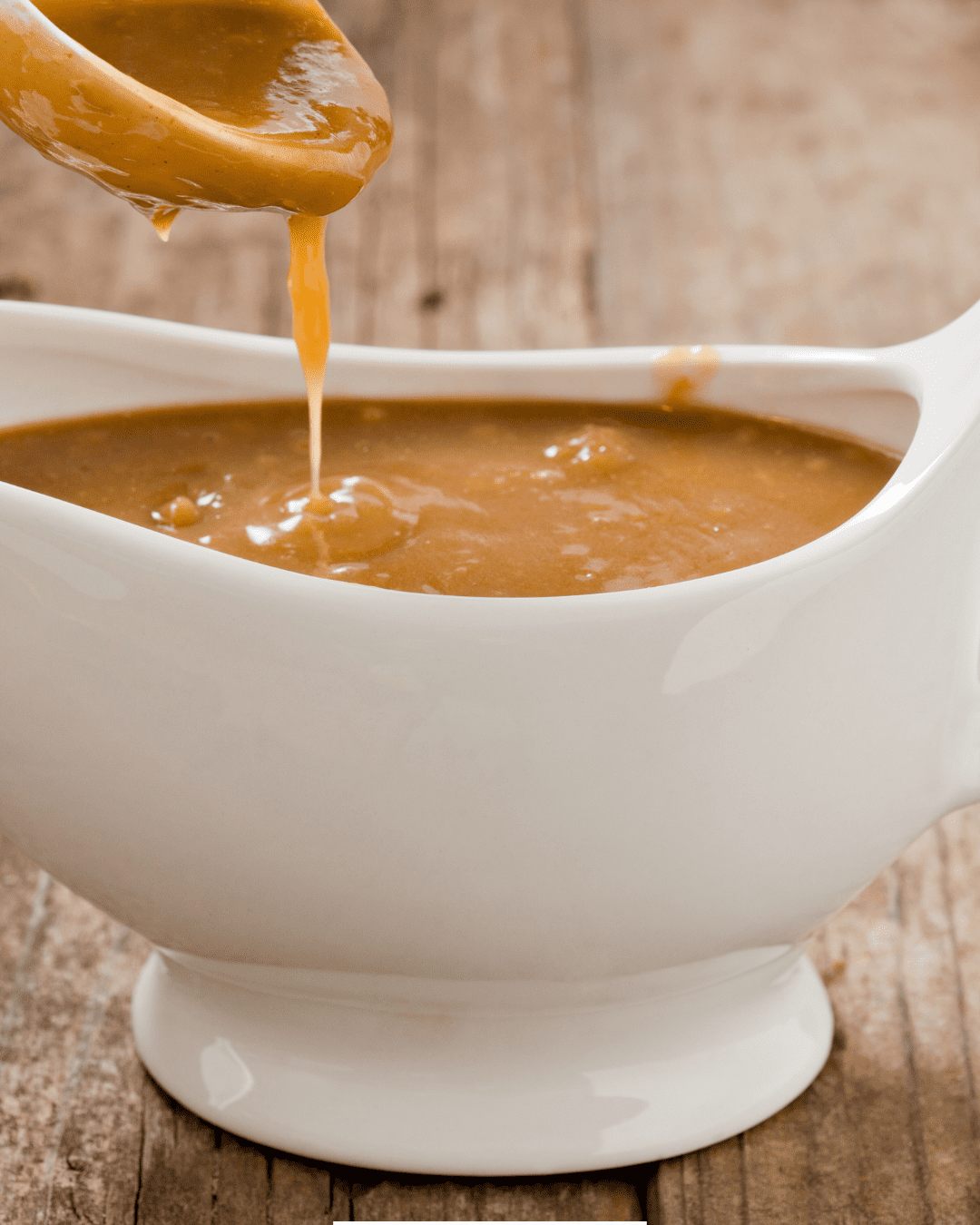
The secret to unforgettable gravy? It’s Alton Brown Turkey Gravy recipe. I’ve always admired Alton Brown’s approach to cooking. His method for turkey gravy is not just straightforward; it’s foolproof!
Table of Contents
How to make Alton Brown Turkey Gravy
Alton Brown Turkey Gravy is the gravy recipe or style popularized by Alton Brown, the well-known American chef and TV personality.
Ingredients
Here are the core ingredients you’ll need to make Alton Brown turkey gravy:
- Pan Drippings from Roasted Turkey
- Turkey Stock (about 2-3 cups)
- Butter (2-3 tablespoons)
- All-Purpose Flour (4 tablespoons)
- White Wine or Vermouth (Optional; about 1/4 cup)
- Onion (1 small, finely chopped)
- Garlic (2 cloves, smashed or minced)
- Thyme (2-3 sprigs)
- Sage (1 sprig)
- Salt and Black Pepper (to taste)
- Heavy cream for extra richness
- A dash of Worcestershire sauce for deeper flavor
Instructions
Follow these steps to create Alton Brown turkey gravy:
Step 1: After roasting your turkey, remove it from the pan, but don’t toss the drippings! Pour off most of the liquid fat, leaving the brown bits and juices in the pan. These flavorful “fond” pieces are key to making the gravy extra delicious.
Step 2: Place the roasting pan (with drippings) over medium heat. If your pan isn’t stovetop-safe, transfer the drippings into a large saucepan or skillet. Add the butter to the pan. Once melted, sprinkle in the flour and whisk constantly to form a smooth paste (the roux). Allow the roux to cook for about 2-3 minutes, which removes the raw flour taste.
Step 3: Pour white wine (or vermouth) into the pan. Using a wooden spoon or whisk, scrape up the browned bits stuck to the bottom of the pan—this ensures maximum flavor in your gravy. Cook for 1-2 minutes until the liquid reduces slightly.
Step 4: Slowly pour the turkey stock into the pan while whisking to incorporate the roux into the liquid. Add the chopped onion, garlic, thyme, and sage to the gravy base. Let the mixture simmer for 10-15 minutes, stirring occasionally, until the gravy thickens to your desired consistency.
Step 5: Once the gravy has thickened, pour it through a fine mesh strainer to remove chunks of onion, garlic, and herbs. Return the strained gravy to the pan or a serving dish, then season with salt and freshly ground black pepper. Taste and adjust as necessary.
Step 6 (Optional): For extra richness, stir in a splash of heavy cream or a dash of Worcestershire sauce at the end.
Tips for Perfect Turkey Gravy
- Save Time with Pre-Made Stock: If you don’t have time to prepare turkey stock from scratch, store-bought chicken or turkey stock works fine. Just be sure to choose a low-sodium option so you can control the saltiness of the gravy.
- Monitor the Thickness: If the gravy seems too thin, whisk in a slurry (a mix of 1 tablespoon cornstarch and 2 tablespoons water) and simmer until the desired thickness is achieved. If it’s too thick, add a little extra stock or water.
- Customize Flavors: Add a splash of balsamic vinegar for a hint of tanginess. Garnish with freshly chopped parsley for a pop of color and freshness.
- Don’t Skip the Deglazing: Deglazing the pan is essential for incorporating all the turkey’s flavor into your gravy. Use a sturdy whisk or wooden spoon to scrape up those bits—they’re liquid gold.
- Keep It Warm: Gravy tends to cool quickly. To keep it warm until serving, transport it to a small crockpot or reheat it over low heat.
What to serve with
Alton Brown turkey gravy is smooth, flavorful, and rich—a true crowd-pleaser that can elevate any dish it graces. While it’s a quintessential side for roasted turkey, its versatility doesn’t stop there.
- Roast Turkey: The obvious and most traditional choice! Alton Brown’s turkey gravy was designed to complement the savory, juicy flavors of roasted turkey. Whether you’re serving a whole turkey or turkey breast, drizzle the gravy generously over slices or serve it alongside for guests to ladle onto their plates.
- Mashed Potatoes: Creamy mashed potatoes are a must-have at any holiday table, and turkey gravy only makes them better. The smooth texture of the gravy blends seamlessly with mashed potatoes, creating a comforting, indulgent bite.
- Stuffing (or Dressing): A Thanksgiving classic, stuffing (or dressing) pairs beautifully with gravy. Use Alton Brown’s turkey gravy to moisten the stuffing and add an extra layer of flavor.
- Dinner Rolls or Biscuits: Warm, buttery dinner rolls or biscuits are perfect for soaking up gravy. Serve them alongside turkey and potatoes, and let guests use them to scoop up every last bit of Alton Brown’s delicious gravy.
Ingredients Substitutes
Making Alton Brown turkey gravy requires a few essential ingredients that help create its rich, flavorful, and perfectly smooth texture. But what if you’re missing an ingredient or need to accommodate dietary restrictions? Don’t worry!
Pan Drippings
Pan drippings from roasted turkey are packed with savory flavor, and they’re the foundation of this gravy recipe. However, if you’re skipping the turkey or don’t have drippings, here’s how to replace them:
Substitute: Use butter (2–3 tablespoons) combined with turkey stock (or chicken stock) to simulate the fat and liquid that drippings provide. You can also add a pinch of poultry seasoning, onion powder, garlic powder, or a splash of Worcestershire sauce for added flavor.
Turkey Stock
Turkey stock is the liquid base for the gravy, and it combines with drippings to create that deep, roasted flavor. If you don’t have turkey stock on hand, try these alternatives:
- Chicken Stock: The closest replacement, chicken stock offers a similar savory profile and works seamlessly as a turkey stock substitute.
- Vegetable Stock: For a vegetarian option, use high-quality vegetable stock. Consider adding more fresh herbs (like thyme and sage) and aromatics to make up for the absence of poultry flavor.
- Bouillon or Broth: A bouillon cube dissolved in water or premade broth can also be used. Just adjust for salt content, as bouillon and canned broths can be quite salty.
Flour
Flour is used to create a roux, which thickens the gravy and gives it a silky texture. If flour is off-limits due to dietary needs, opt for one of these substitutes:
- Cornstarch: Make a slurry by whisking 1 tablespoon cornstarch with 2 tablespoons cold water. Stir the slurry into the hot gravy and let it simmer until thickened.
- Arrowroot Powder: Similar to cornstarch, arrowroot is an excellent thickening agent and works well for gluten-free diets. Use it the same way as cornstarch.
- Gluten-Free Flour Mix: If you prefer flour-based thickening but need it to be gluten-free, use a gluten-free all-purpose flour blend.
Butter
Butter creates the fat for the roux and adds richness to the gravy. If you need a dairy-free or lower-fat alternative, try one of these options:
- Olive Oil: Works as a lighter dairy-free alternative. Use slightly less oil than butter, as it has a stronger flavor.
- Ghee: Similar to butter but without dairy solids, ghee is an excellent option for lactose intolerance.
- Plant-Based Margarine: For a completely vegan substitute, use plant-based margarine. Choose one with low water content for better results in the roux.
White Wine or Vermouth
Adding white wine or vermouth to turkey gravy is optional, but it enhances the flavor and adds bright acidity. If you prefer to skip alcohol, these substitutes work similarly:
- Apple Cider Vinegar: Just a splash will add the acidity lost by omitting wine. It’s milder than wine and has a pleasant fruity tang.
- Lemon Juice: Adds acidity without altering the flavor too much. Use sparingly (1–2 teaspoons) to avoid overpowering the gravy.
- Broth: If acidity isn’t needed, replace wine with extra turkey or chicken broth.
Onion
Onions are used to build flavor in the gravy. If you don’t have them or prefer a different option, here are substitutes:
- Shallots: Offer a milder, slightly sweeter flavor. Finely mince and use the same quantity as onions.
- Green Onions (Scallions): While less traditional, green onions can work in gravy—just chop finely and sauté before adding to the recipe.
- Onion Powder: If fresh onions are unavailable, use a teaspoon of onion powder for every small onion called for in the recipe.
Garlic (Substitute: Garlic Powder or Garlic Paste)
Garlic adds aromatic depth to the gravy, but if you don’t have fresh cloves:
- Garlic Powder: Use about 1/4 teaspoon of garlic powder per clove of garlic called for.
- Garlic Paste: Pre-minced or paste-style garlic can be used as a direct substitute.
Fresh Herbs
Fresh thyme and sage bring earthy, aromatic notes to turkey gravy. If you don’t have fresh herbs on hand, dried herbs or seasoning blends work well.
- Dried Thyme & Sage: Use about 1/3 the amount of dried herbs compared to fresh. For example, substitute 1 teaspoon dried thyme for 1 tablespoon fresh thyme.
- Poultry Seasoning: This blend typically includes sage, thyme, marjoram, and other spices. Use sparingly, as it’s quite concentrated.
Heavy Cream
Heavy cream is optional in the recipe, but it adds extra richness to the gravy. If you need a substitute:
- Half-and-Half: A lower-fat alternative that retains the creaminess. Use the same amount as heavy cream.
- Coconut Milk: Great for dairy-free diets. Opt for unsweetened coconut milk (full-fat for richness).
- Oat Milk: Another dairy-free substitute, oat milk has a neutral flavor and smooth texture.
Final Thoughts
Alton Brown turkey gravy is a star on its own, capable of enhancing both classic Thanksgiving staples and creative dishes alike.
More Sauce Recipes:
- Costco Kevin’s Gravy Recipe
- Homemade Trader Joe’s Cranberry Sauce Recipe
- Copycat Trader Joe’s Turkey Gravy Recipe
- Homemade Costco Cranberry Sauce Recipe
Ingredients
- Pan Drippings from Roasted Turkey
- Turkey Stock (about 2-3 cups)
- Butter (2-3 tablespoons)
- All-Purpose Flour (4 tablespoons)
- White Wine (Optional; about 1/4 cup)
- Onion (1 small, finely chopped)
- Garlic (2 cloves, smashed or minced)
- Thyme (2-3 sprigs)
- Sage (1 sprig)
- Salt and Black Pepper (to taste)
- Heavy cream for extra richness
- A dash of Worcestershire sauce
Instructions
Step 1: After roasting your turkey, remove it from the pan, but don’t toss the drippings! Pour off most of the liquid fat, leaving the brown bits and juices in the pan. These flavorful “fond” pieces are key to making the gravy extra delicious.
Step 2: Place the roasting pan (with drippings) over medium heat. If your pan isn’t stovetop-safe, transfer the drippings into a large saucepan or skillet. Add the butter to the pan. Once melted, sprinkle in the flour and whisk constantly to form a smooth paste (the roux). Allow the roux to cook for about 2-3 minutes, which removes the raw flour taste.
Step 3: Pour white wine (or vermouth) into the pan. Using a wooden spoon or whisk, scrape up the browned bits stuck to the bottom of the pan—this ensures maximum flavor in your gravy. Cook for 1-2 minutes until the liquid reduces slightly.
Step 4: Slowly pour the turkey stock into the pan while whisking to incorporate the roux into the liquid. Add the chopped onion, garlic, thyme, and sage to the gravy base. Let the mixture simmer for 10-15 minutes, stirring occasionally, until the gravy thickens to your desired consistency.
Step 5: Once the gravy has thickened, pour it through a fine mesh strainer to remove chunks of onion, garlic, and herbs. Return the strained gravy to the pan or a serving dish, then season with salt and freshly ground black pepper. Taste and adjust as necessary.
Step 6 (Optional): For extra richness, stir in a splash of heavy cream or a dash of Worcestershire sauce at the end.
